PDF Viewer: Read, Scan & Edit
- 4.4
- Rating
- 100.00K
- Installs
- Free
- Price
 Analysis by App-foxy
I usually judge a PDF app by what happens between receiving a document and actually finishing something with it. Opening a file is easy; finding the right file, reading it comfortably, moving it to another person, and avoiding unnecessary friction is the real test. PDF Viewer: Read, Scan & Edit is aimed at that everyday productivity gap. I found it most useful as a straightforward document tool rather than as a complete office suite, and that distinction matters before you make it your main work app.
PDF Viewer: Read, Scan & Edit is a free productivity app from OCEAN FEATHER TECHNOLOGY INC. Its central job is clear from the name: help you view PDF documents, scan paper material, and carry out editing-related tasks from a mobile device. It has an Everyone age rating, works from Android 8.0 onward, and the current release is version 1.1.1. The app has passed the early discovery stage with more than one hundred thousand installs, while its average rating sits at 4.4 from roughly two hundred ratings.
From receiving a document to sending it on
When I’m handling a document on a shared household device, I try to keep the workflow simple: open only the file needed, check it, and make clear which copy is ready to go. This section looks at that practical handoff and why a little care with filenames and final checks can prevent mix-ups when more than one person uses the same phone.
You May Also Like

 Blood Strike: 2.5 Anniversary
Blood Strike’s Loadouts Turn Every Drop Into a Tactical Gamble
A close look at Blood Strike’s custom loadouts: how fast access to signature weapons reshapes its battle royale rhythm, rewards preparation, and narrows the gap between fights.

 Pandora - Music & Podcasts
Pandora’s Music Is Easy to Start, but Harder to Recover
Pandora’s strength is its low-effort path from a seed to a station. Its weak spot is how much confidence it asks you to place in connection, setup, and quiet recovery.

 8 Ball Pool
 Is Built on Rivalries, Rematches, and Routine
A close look at the rivalries, rematches, shared routines, and unanswered safety questions that turn a quick pool match into a persistent mobile community.

 Samsung Music
’s Quiet Strength Is Playing What You Already Own
Its reach comes less from spectacle than from dependable access to a personal library. That simplicity is both the app’s strongest retention engine and its ceiling.

 AccuWeather: Weather Radar
AccuWeather Review: A Quick, Clear Forecast for Everyday Decisions
For everyday plans, the best forecast is the one you can understand quickly. AccuWeather makes rain timing, radar, and local conditions easy to act on, with a few trade-offs.

 Hill Climb Racing
Why Hill Climb Racing Still Turns Crashes Into One More Run
A tiny car, a bumpy hill and one more upgrade: Hill Climb Racing keeps resurfacing because its simple chaos makes every near-miss feel personal.
More From Our News Desk
View All News


Starting with the document you already have
The most realistic starting point is not creating a polished report from scratch. It is receiving a PDF in a message, downloading a form, finding an old document on the phone, or needing to turn a paper page into something shareable. In that situation, a dedicated viewer is more convenient than opening a full office application that brings along tools you do not need.
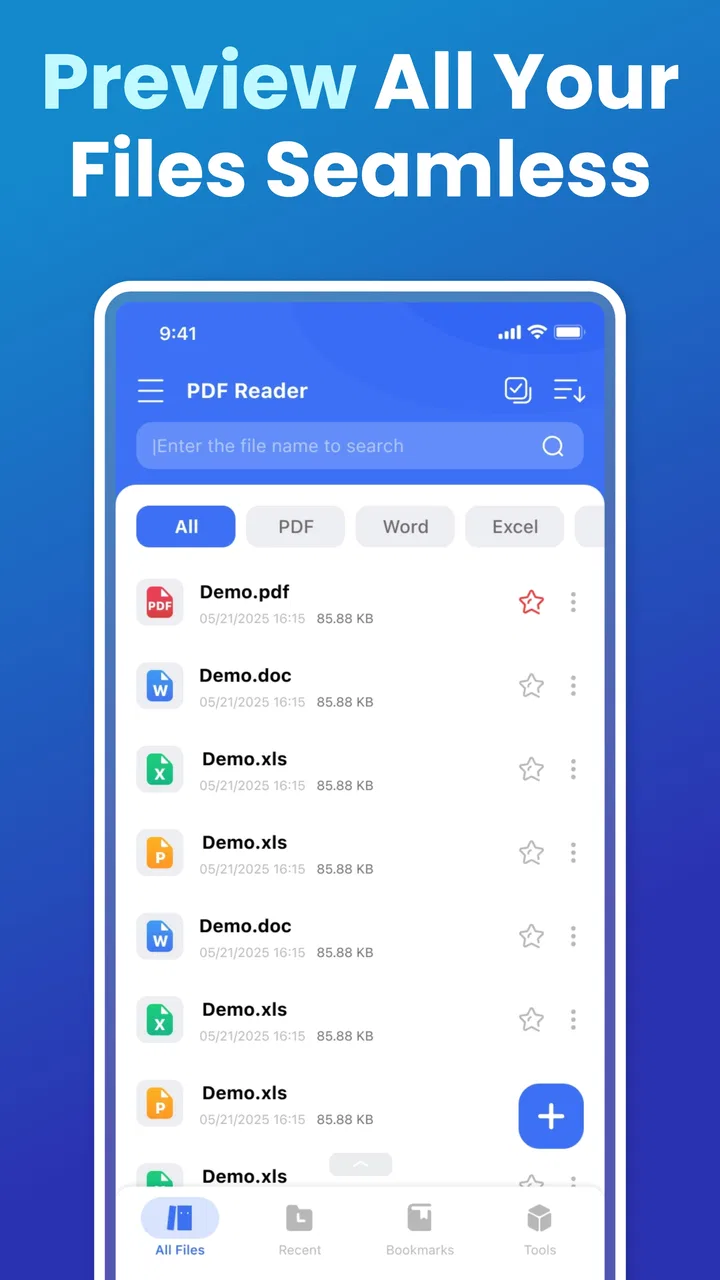
I like the idea of beginning with one focused destination. Instead of switching between a file manager, a browser preview, a scanning utility, and a separate PDF reader, the app is designed around document handling. That does not automatically make every step perfect, but it gives the workflow a sensible center: bring in the document, inspect it, do the necessary work, and pass it along.
For a quick review, invoice, instruction sheet, school handout, or application form, this focus is practical. I would not approach it expecting desktop publishing or advanced document production. The better question is whether it reduces the number of small interruptions involved in handling a PDF on a phone. For ordinary personal and work errands, that is where its value is easiest to see.
Reading without turning the phone into a workstation
Reading is the part most people will use first. A PDF viewer needs to make pages easy to inspect, especially when the document was designed for a larger screen. On a phone, the experience depends less on having a long feature list and more on whether moving through pages feels predictable. I found a focused viewer more comfortable for short reading sessions than a broad productivity suite that treats the PDF as just one file type among many.
A useful habit is to open the document before deciding what to do with it. That sounds obvious, but it prevents unnecessary editing or rescanning. I first check whether the page is legible, whether the orientation is sensible, and whether the file contains the pages I expected. This is especially important with forms and multi-page attachments, where a missing page can create a problem later in the handoff.
The app’s role as a reader also makes it suitable for people who mainly consume PDFs rather than create them. Students checking course material, renters reviewing paperwork, travelers carrying confirmations, and workers consulting instructions can all benefit from a dedicated place to open documents. The free price removes the usual hesitation about installing a tool for occasional use.
Scanning paper when the original is not digital
The workflow changes when the starting point is a physical page. A scan is not merely a photograph; it is a handoff from the real world into a file that another person must be able to read. I would use the scanning side for a signed page, receipt, identification-related paperwork where appropriate, or a short form that needs to be sent without access to a desktop scanner.
The most important practical tip is to prepare the page before opening the camera-based step. Flatten creases, use even light, remove clutter from the background, and place the paper on a surface that contrasts with its edges. Those small choices often matter more than the app itself. A rushed scan can technically become a PDF while still being difficult for the recipient to read.
I would also review every captured page before treating the scan as finished. Look for cut-off corners, shadows over text, sideways pages, and accidental blank captures. This is one of the less obvious trade-offs of mobile scanning: it is convenient at the point of capture, but the responsibility for checking quality remains with you. A few seconds of inspection can prevent a second trip to the paper document.
Editing as a finishing step, not a replacement for a document editor
The word “edit” can mean many things in a PDF application. In a practical mobile workflow, I interpret it as making a document usable for its next destination rather than rebuilding the entire file. That may involve preparing a scan, adjusting what needs attention, or making a small correction before sharing. I would keep expectations measured: a PDF is often a fixed-layout document, so editing it is not the same as changing a flexible text document.
This distinction helps avoid a common mistake. If you need to write a long report, manage complex tables, or preserve sophisticated formatting while making extensive changes, a full office editor on a larger screen is usually the better choice. If you need to handle a document that already exists and make it ready for a handoff, a focused PDF tool makes more sense.
My advice is to decide the desired outcome before touching the editing controls. Do you need a readable copy, a complete scan, a document that can be reviewed, or a file ready to send? That decision keeps the process efficient. It also exposes the app’s natural boundary: it is strongest when the document is already close to its final form and weakest when the task becomes document authoring.
The handoff is where a mobile PDF workflow proves itself
After reading or preparing a file, the next stage is usually sharing it with someone else. This is where a document stops being a private item on the phone and becomes part of a larger process. A scan sent to a manager, a form returned to a school, or a receipt passed to an accountant must be understandable without an explanation from you.
Before sending, I would reopen the finished file and check it as the recipient will see it. Confirm that the pages are in the intended order, that the text is readable at a normal zoom, and that the final result is the file you meant to attach. This is a simple but valuable workflow improvement because mobile devices make it easy to confuse an original, a draft, and a newly scanned copy.
There is also a naming habit worth adopting. Use a clear filename that identifies the document and its purpose instead of relying on a camera-generated label or a vague download name. The app can be the place where you prepare the PDF, but the quality of the handoff depends on the surrounding habits too. A well-prepared file with a confusing name still creates avoidable work for the recipient.
A realistic everyday example
Imagine that I receive a short application form while away from my computer. I open it in the viewer to confirm the pages and read the instructions. I then use the phone-based workflow to capture the page that must be returned, inspect the result for shadows and missing edges, and prepare the finished document for sharing. Before sending, I compare the page count and readability with the original.
That scenario shows why the app is more useful as a chain of small steps than as a single headline feature. The starting condition is an inconvenient document. The middle of the process is checking, scanning, and preparing. The outcome is a PDF that another person can open and understand. The friction comes from mobile limitations, lighting, file confusion, and the need to verify the result manually.
I would use the same approach for a receipt that needs to reach a finance contact. I would not assume that the first capture is good enough just because the entire page appears on screen. Receipts often contain small text and pale printing, so I would pay particular attention to contrast and legibility. If the result is marginal, rescanning immediately is easier than explaining an unreadable attachment later.
Where it compares well with usual alternatives
The usual alternative is a general file manager combined with whichever application happens to open PDFs by default. That setup can work, but it often spreads the workflow across several places. A dedicated app is more appealing when you regularly move between reading an existing PDF and preparing a paper document for digital use.
Another alternative is a full office suite. That is the better choice when your work begins with blank pages, extensive text entry, spreadsheets, presentations, or complex collaboration. For a person who mainly needs to inspect and process PDFs, however, a large suite may feel heavier than necessary. PDF Viewer: Read, Scan & Edit has a clearer everyday purpose, even if it does not replace a complete office environment.
Cloud storage previews are useful when documents already live online and need to be accessed across devices. They are less attractive when the immediate task is local, quick, and centered on a physical page. A separate scanning app may also be preferable for someone who needs highly specialized capture controls or a long-established archival system. The trade-off here is convenience versus depth: this app’s appeal is keeping the document task compact.
Who will get the most from it
I would recommend it to someone who wants a free Android tool for occasional or regular PDF handling without committing to an elaborate productivity platform. It suits people who receive forms, read digital paperwork, scan short documents, and need a practical route from phone to shareable file.
It is also a sensible option for users on older Android devices because its minimum operating-system requirement reaches back to Android 8.0. That does not guarantee identical performance on every phone, but it makes the app accessible to people who are not using the newest hardware. The Everyone rating also makes it broadly appropriate for general household use.
I would be more cautious about recommending it as the only document tool for a professional who spends most of the day making major changes to PDFs. If your work depends on detailed form construction, advanced markup, document security controls, or precise layout preservation, you should compare it with a more specialized solution. The app is best understood as a practical mobile companion, not a complete replacement for a desktop document workflow.
Where the flow breaks down
The first weak point is the phone screen itself. Even a capable viewer cannot make a dense contract as comfortable to study as it would be on a monitor or tablet. Long documents demand more zooming, panning, and attention, and that can make careful comparison tiring. For serious review, I would use the app to locate and inspect material, then move to a larger display when accuracy matters.
The second weak point is scanning quality. Mobile capture depends on light, alignment, camera clarity, and the condition of the paper. A document can look acceptable in the capture preview but become difficult to read when opened later. This is why I consider the review step essential rather than optional. The app can support the process, but it cannot correct every poor starting condition.
The third issue is the boundary between processing and editing. People often hear “edit” and expect the same freedom they have in a word processor. PDFs are not always cooperative in that way. If the intended change is substantial, repeated, or layout-sensitive, the mobile workflow may become slower than starting in the original authoring application. Knowing that before you begin prevents disappointment.
There is also a handoff risk whenever several versions of a document are created. An original download, a scan, and a prepared copy can look similar in a phone’s file list. I recommend keeping only the versions you need in an identifiable sequence and checking the final attachment immediately before sharing. This is not glamorous, but it is the kind of operational detail that determines whether a document app actually saves time.
My practical verdict
After looking at the complete path from input to outcome, I see PDF Viewer: Read, Scan & Edit as a useful, accessible tool for everyday PDF errands. Its strongest point is focus: it brings reading and mobile document preparation into one productivity-oriented experience instead of asking you to assemble a workflow from unrelated utilities.
The free price makes it easy to try, and its current version, 1.1.1, shows that the app is being presented as an actively usable release rather than an abandoned experiment. Its 4.4 average and over one hundred thousand installs suggest that it has found an audience, although I would still judge it against your own document habits rather than treating those figures as a guarantee.
My recommendation is simple: choose it when your goal is to get an existing PDF or paper document into a readable, shareable state with minimal ceremony. I would skip it as a primary tool for heavy editing, long-form creation, or demanding document administration. Used within its natural limits, it can turn an annoying phone task into a manageable sequence: open, inspect, scan when needed, check the result, and hand it off with confidence.
FAQs for PDF Viewer: Read, Scan & Edit
01What is PDF Viewer: Read, Scan & Edit used for?
PDF Viewer: Read, Scan & Edit is designed to help you manage PDF documents from a mobile device. You can open and read files, browse pages, search for text, scan paper documents, and make basic edits or annotations, depending on the tools available in your version. It can be useful for students, office workers, and anyone who regularly handles digital paperwork.
02Can I scan paper documents and save them as PDF files?
Yes, the app includes scanning functionality that allows you to use your phone or tablet camera to capture paper documents. After taking a photo, you can usually adjust the edges, improve readability, and save the result as a PDF. Scan quality depends on lighting, camera focus, and the condition of the original document, so clear, flat pages produce the best results.
03Does PDF Viewer: Read, Scan & Edit allow users to edit PDF documents?
The app supports common PDF editing and markup tasks, such as adding notes, highlighting text, drawing, signing, or inserting simple elements, although the exact tools may vary by device and subscription plan. It should not necessarily be compared with a full desktop PDF editor. Before downloading, check which editing features are free and which require an upgrade.
04Can I use the app without an internet connection?
Many basic functions, including opening previously downloaded PDF files, reading documents, and using certain annotation tools, may work offline. However, features such as cloud synchronization, online file conversion, sharing integrations, or account-based services can require an internet connection. It is a good idea to download important files in advance if you expect to work without reliable mobile data or Wi-Fi.
05Is PDF Viewer: Read, Scan & Edit free to download and safe for private documents?
The application may be available as a free download, but some advanced features can be restricted by advertisements, in-app purchases, or a premium subscription. Because the app can handle sensitive documents, review its privacy policy and requested permissions before importing personal, financial, or work-related files. Avoid granting access that is not necessary, and use secure sharing options when sending PDFs.
Pros
- Opens PDFs quickly
- including large documents
- with smooth page navigation.
- Built-in scanning turns paper documents into searchable digital files.
- Supports annotations
- highlighting
- signatures
- and basic document editing.
- Useful file organization makes recent and saved documents easy to find.
- Works offline for reading PDFs without requiring a constant internet connection.
Cons
- Some advanced editing and export tools may require a premium subscription.
- OCR accuracy can vary with blurry images
- unusual fonts
- or poor lighting.
- Scanning multi-page documents can be slower on older smartphones.
- The app may request broad storage or camera permissions to use all features.
- Ads or upgrade prompts may interrupt the experience for free users.

PDF Viewer: Read, Scan & Edit
Gallery